
There is a lot of talk today about AI tools, chatbots, and business automation. But when you look at everyday work inside a real company, the biggest chaos still often happens in a very ordinary place: the phone. Someone calls, someone answers, something gets written down in passing, something is forgotten, something is sent to the wrong person, and then the fixing begins.
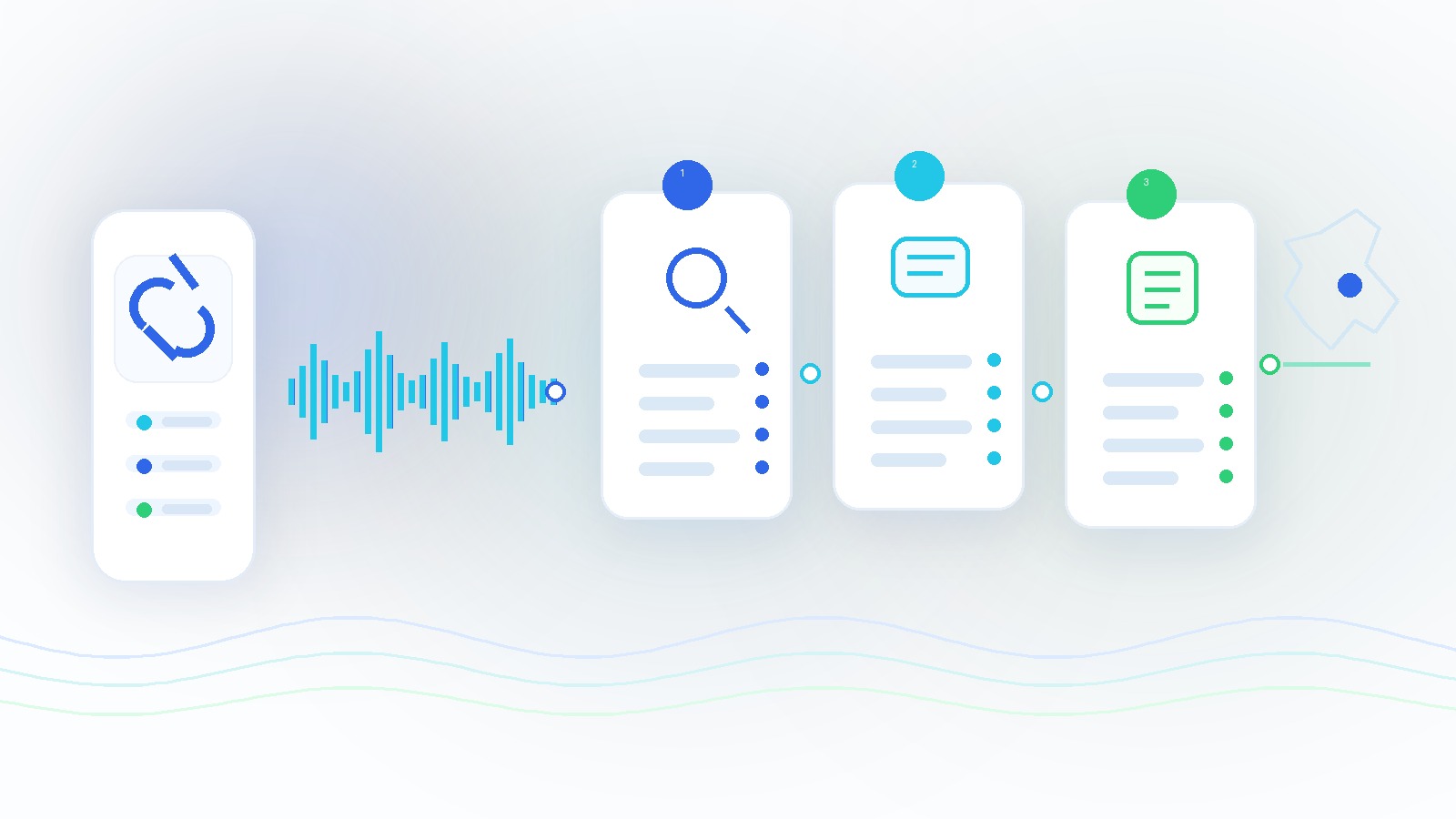
That is where AI voice agents can make a much bigger difference than most people expect. Not because they sound impressive, but because they can take the incoming call, understand the caller's intent, extract the important details, and turn the conversation into a clear request that immediately enters the next process.
That point matters. The goal is not only to answer calls 24/7. The goal is to make sure that what enters the system is clear, structured, and usable. Only then does automation genuinely help the business instead of only helping the marketing story.
What is the difference between a voice agent and a typical chatbot?
A typical chatbot usually waits for someone to type a question. A voice agent works on a channel that is still critical for many companies: the phone call. That matters especially in industries where people expect a fast response, where situations are urgent, or where the customer simply does not want to type.
But the story does not end there. A voice agent becomes truly valuable only when it is connected to the process behind the call. If the result of the conversation is only a transcript, that is still half-finished work. If the conversation becomes a structured request that goes to the right person or enters a CRM, calendar, or internal system, then we are talking about real operational value.
That is why a voice agent should not remain just another communication channel. It should become part of a broader inbound operating model.
Why companies lose inquiries even when they answer the phone
This is the part that often gets overlooked. The problem is not only a missed call. The problem is also a badly handled call. An employee answers but has no time. A message is taken without the important details. The information stays in someone's inbox. Or the request is passed on verbally and half of it disappears along the way.
That is why automating inbound calls is not only about availability. It is about the quality of the input, which I also break down in the article on the AI voice agent for inbound calls. If the input is messy, everything after it moves more slowly. If the input is clean, structured, and traceable, the whole team works with more calm and more precision.
In practice, the biggest problem appears when the conversation ends and the system receives nothing useful. That is when people waste time trying to reconstruct what the customer actually asked for, how urgent the request is, and who should respond. That is where both speed and trust are lost.
Where AI business automation really helps here
The biggest gains appear in companies that receive many similar inquiries, bookings, issue reports, status questions, or intervention requests every day. Tourism, healthcare, property management, customer support, service businesses, logistics, and sales teams quickly feel the difference when the first interaction no longer depends on whoever happens to be free at that moment.
- tourism businesses and apartments with a high number of repetitive calls
- clinics and medical practices where fast intake matters
- service and field teams that need to classify urgency quickly
- sales and support teams that want cleaner CRM and internal workflows
In that kind of system, AI is not pretending to be human for appearance's sake. It handles the part of the process that has always been the most fragile: listening, understanding, recording, and forwarding without losing context. And that is exactly where most operational noise usually begins.
What a good outcome actually looks like
A good outcome is not only fewer missed calls. It also means less repetition, less manual rewriting, fewer internal messages like ?what exactly did the customer ask for??, and less backtracking to reconstruct the problem.
When an AI voice agent works properly, the call ends, but the process finally begins in an orderly way. The request is recorded. The context is there. The next step is clear. Someone can react immediately, and someone else can react later and still understand exactly what happened. That is a major difference in everyday operations.
Most importantly, the team stops working in a purely reactive mode. Instead of putting out fires, it gets a clean entry point, clear responsibility, and far less improvisation.
Will customers be bothered by it?
That depends on how the system is designed. People are usually not bothered by the fact that they are talking to technology. They are bothered when nobody understands them, when they have to repeat the same thing three times, or when nothing happens after the call.
If the conversation feels natural, if the agent guides the user clearly, and if something genuinely happens after the call, the experience can be better than dealing with an overloaded team that is always running late. So the real question is not whether a human or AI gave the answer. The real question is whether the problem was received and handled properly.
That is why conversation design matters more than the ?wow? effect. A good voice agent is not trying to impress. It is trying to be clear, calm, and useful.
Why this matters right now
More and more companies in Serbia are talking about AI business automation. That is expected. But the companies that will actually benefit are the ones solving concrete operational bottlenecks, not the ones simply adding another trendy tool.
If inbound calls are one of your weak points, an AI voice agent can be one of the most practical places to start. Because once the entry point becomes clean, a lot of what comes after it finally starts working the way it should.